

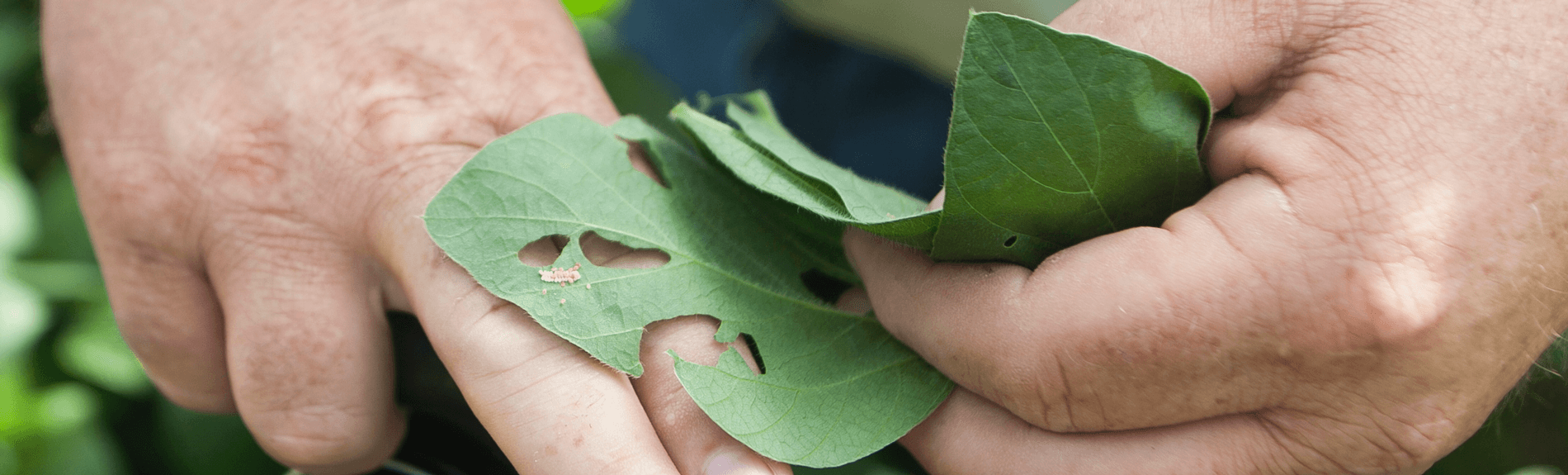
Through the application of emerging technologies like big data, remote sensing, gene editing and nanotech, we translate our research from the lab to the field to the food on your table.
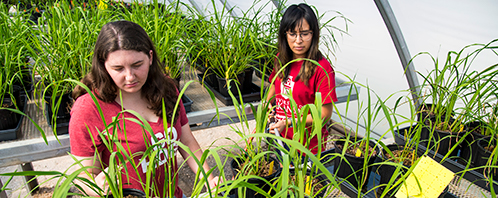
Masters Programs
The Department of Entomology and Plant Pathology offers Master of Science (M.S.) degree programs in both entomology and plant pathology. Assistantships are available for graduate students looking for assistance in funding their advanced degrees.
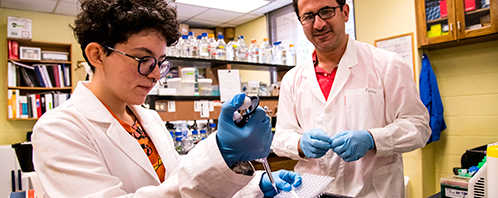
Ph.D. Program
The department offers a Doctor of Philosophy Degree in Agricultural, Food and Life Sciences (AFLS) with the option to concentrate in either Entomology or Plant Pathology. Assistantships and fellowships are available to assist with funding the AFLS Ph.D. program.
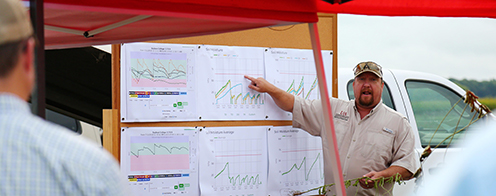
Find an Expert
Our department is staffed with award-winning, nationally-recognized faculty members who not only serve students on campus, but also conduct research that benefits industries and communities across the state, nation and globe.
Our Purpose
If you can support our efforts to develop future professionals in entomology and plant pathology, your financial contributions would be greatly appreciated.
Use the link here to make a donation: bit.ly/UAEntomology
Vision
The Department is a global leader in entomology and plant pathology; promoting human, animal, and plant health, environmental sustainability and food security.
Mission
The Department serves science and society through discovery, translation and dissemination of knowledge and resources to promote human, animal, and plant health, environmental sustainability and food security.
Core Values
- Foster interdisciplinary and synergistic collaboration.
- Champion a supportive, diverse, and inclusive environment.
- Support innovation and excellence.
- Ensure scientific integrity.
- Engage and serve our stakeholders.
ENPL Highlights
spring 2024
Recent Events
- Chandan Maurya's project on "Globodera pallida RHA1B Protein" won first place at AR-BIC 2024 held at the Wyndham Riverfront in Little Rock on February 26-27, 2024!
- Rachel Taylor has been awarded a prestigious National Science Foundation Graduate Research Fellowship
Current Job Openings:
- Program Associate - Nematology
- Apply Here
- Program Associate - Forest Health
- Apply Here
- Assistant Professor – Soilborne Diseases
- This is a 12-month, tenure-track faculty position (80% research/20% teaching). The successful candidate will develop a robust, extramurally funded research program focused on aspects of soil-borne plant diseases of agronomic crops grown in Arkansas. Applicants should have experience in soil-borne pathogen biology and ecology for the development of integrated disease management strategies, which may include holistic approaches to enhance soil and plant health. All interested candidates must submit an application online at https://uasys.wd5.myworkdayjobs.com/en-US/UASYS/jobs/details/Assistant-Professor---Plant-Pathology--Soil-borne-diseases_R0045103
- Post Doctoral Fellow Position 1 - Plant Pathology
- Post Doctoral Fellow Position 2 - Plant Pathology
- Post Doctoral Fellow Position - Entomology
-
Post Doctoral Fellow Position - Entomology